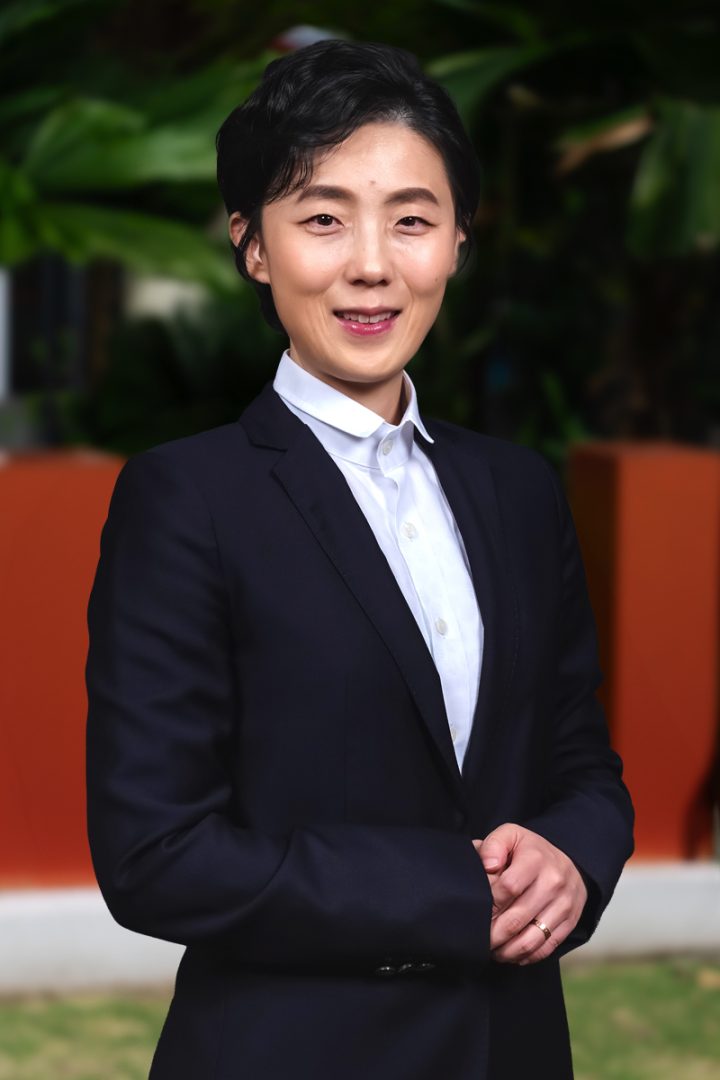
Affiliations
Associate Professor, Singapore Institute of Technology
Adjunct Associate Professor, NUS Synthetic Biology for Clinical and Technological Innovation (SynCTI)
Biography
In Young Hwang is a cancer biologist by training, and her research focuses on engineering micro-organisms for therapeutic and biotechnological applications. Received her Ph.D in the field of cancer biology and therapeutics from University of Auckland, expanded her research interest to Synthetic Biology the Chang lab in 2012. Her notable work includes engineering microbes with programmable functions as novel therapies for human diseases, including pathogenic infections, metabolic disorders and cancer. Her research published in reputable journals and several international patents have been filed.
Education
PhD (Molecular Medicine), University of Auckland, New Zealand
Bachelor of Science (Biomedical Science) with First Class Honours, University of Auckland, New Zealand
Research Interest
Metabolic engineering of microbes for biochemical production
Development of biosensors and genetic tool-box in microbial systems
Reprogramming probiotics and commensal microbes for health
Mammalian cell engineering for bioproduction
Current Research Projects
Centre for Precision Fermentation and Sustainability (PreFerS)
2024 – 2029
NRF, Co-PI
Fighting Amebiasis with bacteria: a combined approach with natural probiotics and engineered bacteria
2020 – 2024 Present
NRF, PI
Selected Publications
- Shen H, Aggarwal N, Cui B, Foo GW, He Y, Srivastava SK, Li S, Seah MZX, Wun KS, Ling H, Hwang IY, Ho CL, Lee YS, Chang MW. (2025) Engineered commensals for targeted nose-to-brain drug delivery. Cell 188, 1-18.
- Shen H, Zhang C, Li S, Liang Y, Lee LT, Aggarwal N, Wun KS, Liu J, Nadarajan SP, Weng C, Ling H, Tay JK, Wang DY, Yao SQ, Hwang IY*, Lee YS, Chang MW*. (2024) Prodrug-conjugated tumor-seeking commensals for targeted cancer therapy. Nat Commun 15, 4343.
- Aggarwal, N., Liang, Y., Foo, J.L., Ling, H., Hwang, I.Y., and Chang, M.W. (2022) FELICX: A robust nucleic acid detection method using flap endonuclease and CRISPR-Cas12. Biosensors and Bioelectronics, 222, 115002.
- Aggarwal, N., Kitano, S., Puah, G.R.Y., Kittelmann, S., Hwang, I.Y., and Chang, M.W. (2022) Microbiome and Human Health: Current Understanding, Engineering, and Enabling Technologies. Chemical Reviews. 123, 31-72.
- Chua, K.J., Ling, H., Hwang, I.Y., Lee, H.L., March, J.C., Lee, Y.S., and Chang, M.W. (2022) An Engineered Probiotic Produces a Type III Interferon IFNL1 and Reduces Inflammations in in vitro Inflammatory Bowel Disease Models. ACS Biomater. Sci. Eng. 9, 5123-5135.
- Koh E‡, Hwang IY‡, Lee J.W.J, Lee Y.S, March J.C, Chang MW. (2022) Engineering probiotics to inhibit Clostridioides difficile infection by dynamic modulation of intestinal metabolism. Nat Commun 13, 3834. ‡authors contributed equally.
- Hwang IY, Kim HR, Chang MW. (2021) Engineered probiotics to alter endocannabinoid system. Biotechnol. Notes. 2, 33-38.
- Lo T-M‡, Hwang IY‡, Cho H-S‡, Fedora RE, Chng SH, Choi WJ, Chang MW. (2021) Biosynthesis of commodity chemicals from oil palm empty fruit bunch lignin. Front. Microbiol 12, 684. ‡authors contributed equally.
- Sieow BF, Wun KS, Yong WP, Hwang IY*, Chang MW*. (2021) Tweak to treat: reprograming bacteria for cancer treatment. Trends Cancer 7 (5) 447-464.
- Sun T, Kwok WC, Chua KJ, Lo T-M, Potter J, Yew WS, Chesnut JD, Hwang IY*, Chang MW*. (2020) Development of a proline-based selection system for reliable genetic engineering in Chinese hamster ovary cells. ACS Synth Biol, 9, 1864–1872.
* Corresponding author; # Co-first author