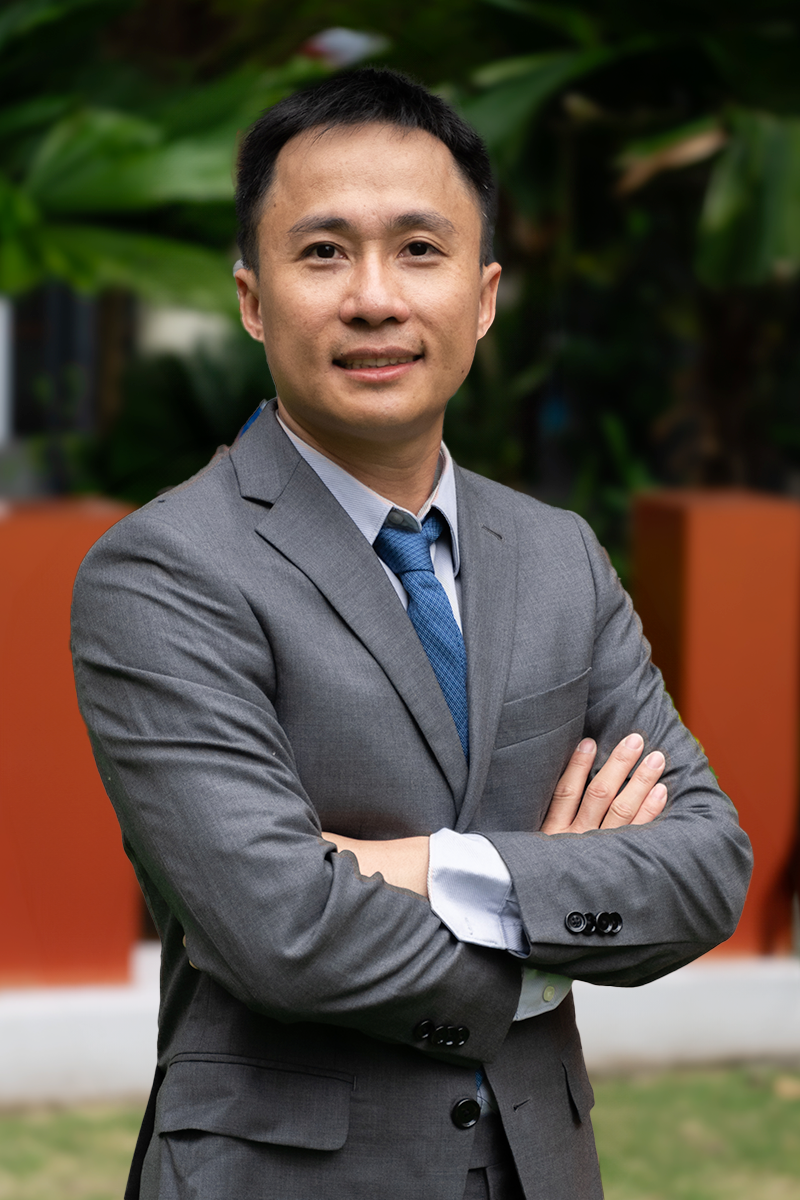
Office Location – S9 #10-02C
Affiliations
Assistant Professor, Department of Biochemistry, Yong Loo Lin School of Medicine, NUS
Principal Investigator, NUS Synthetic Biology for Clinical and Technological Innovation (SynCTI)
Professional Appointments
Altos Labs, San Diego, USA (2022-2025)
Salk Institute for Biological Studies, San Diego, USA (2016-2022)
Education
Ph.D., University of Wisconsin-Madison, Madison, USA (2016)
M.Sc., Guangzhou Institute of Biomedicine and Health, Guangzhou, China (2010)
B.Sc., Sun Yat-sen University, Guangzhou, China (2007)
Research Interest
Stem cells-based modeling of developmental processes and the generation of novel cells or tissues for regenerative medicine.
Current Research Projects
This research integrates advanced stem cell technologies with synthetic biology to create high-fidelity models of early human development and specialized tissues. By engineering stem cells to self-organize into structures such as blastoids (mimicking early embryos) and islet organoids (mimicking insulin-producing pancreatic tissue), the lab aims to deepen our understanding of embryogenesis and develop novel therapies for degenerative diseases.
A key innovation in this work is the use of synthetic genetic circuits to precisely orchestrate cell development. This approach ensures that cells differentiate into the correct types and organize themselves accurately, overcoming current limitations in tissue engineering. Ultimately, this precision enhances the safety and functionality of engineered tissues, paving the way for more effective applications in treating diabetes, addressing infertility, and advancing regenerative medicine.
Core Focus Areas:
- Modelling developmental processes using stem cells
- Synthetically regulating multicellular systems
- Engineering cells to enhance therapeutic function
- Reprogramming cells to restore and improve functionality
Selected Publications
- Lu JY, Tu WB, Li R, Weng M, Sanketi BD, Yuan B, Reddy P, Esteban CR, Belmonte JCI. Prevalent mesenchymal drift in aging and disease is reversed by partial reprogramming. Cell. Elsevier; 2025 Oct 16;188(0):1–17. https://doi.org/10.1016/j.cell.2025.07.031
- Li R, Izpisua Belmonte JC. Protocol for the generation of blastocyst-like structures from mouse extended pluripotent stem cells. STAR Protocols. 2021 Sep 17;2(3):100745. https://doi.org/10.1016/j.xpro.2021.100745
- Liu H*, Li R*, Liao H-K*, Min Z, Wang C, Yu Y, Shi L, Dan J, Hayek A, Martinez Martinez L, Nuñez Delicado E, Izpisua Belmonte JC. Chemical combinations potentiate human pluripotent stem cell-derived 3D pancreatic progenitor clusters toward functional β cells. Nat Commun. Nature Publishing Group; 2021 Jun 7;12(1):3330. (* equal contribution) https://doi.org/10.1038/s41467-021-23525-x
- Li R*, Zhong C*, Yu Y*, Liu H, Sakurai M, Yu L, Min Z, Shi L, Wei Y, Takahashi Y, Liao H-K, Qiao J, Deng H, Nuñez-Delicado E, Rodriguez Esteban C, Wu J, Izpisua Belmonte JC. Generation of Blastocyst-like Structures from Mouse Embryonic and Adult Cell Cultures. Cell. 2019 Oct;179(3):687-702.e18. (* equal contribution) https://doi.org/10.1016/j.cell.2019.09.029
- Li R, Dong Q, Yuan X, Zeng X, Gao Y, Chiao C, Li H, Zhao X, Keles S, Wang Z, Chang Q. Misregulation of Alternative Splicing in a Mouse Model of Rett Syndrome. PLoS Genet. 2016;12(6):e1006129. https://doi.org/10.1371/journal.pgen.1006129
- Li R*, Liang J*, Ni S, Zhou T, Qing X, Li H, He W, Chen J, Li F, Zhuang Q, Qin B, Xu J, Li W, Yang J, Gan Y, Qin D, Feng S, Song H, Yang D, Zhang B, Zeng L, Lai L, Esteban MA, Pei D. A mesenchymal-to-epithelial transition initiates and is required for the nuclear reprogramming of mouse fibroblasts. Cell Stem Cell. 2010 Jul 2;7(1):51–63. (* equal contribution) https://doi.org/10.1016/j.stem.2010.04.014