Office Location – S9 Level 10, 4 Science Drive 2, Singapore 117544
Affiliations
Assistant Professor, Department of Microbiology & Immunology, Yong Loo Lin School of Medicine, NUS
Principal Investigator, NUS Medicine Synthetic Biology Translational Research Programme
Biography
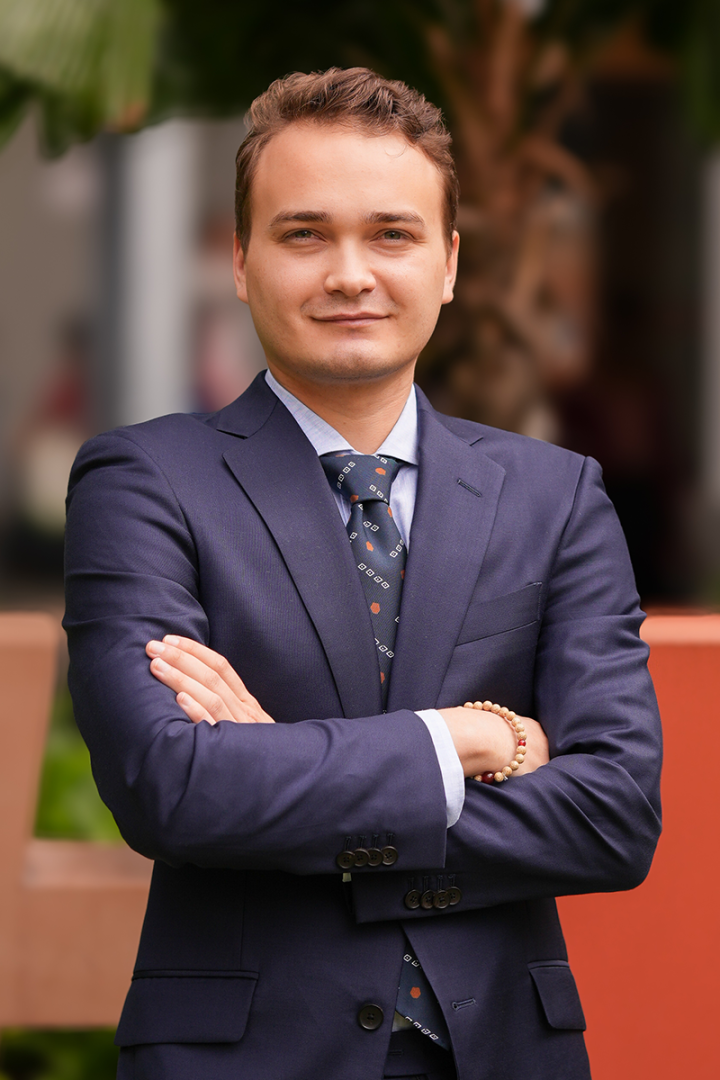
Dr. Kuziel is an Assistant Professor in the Department of Microbiology and Immunology and the Synthetic Biology for Clinical and Technological Innovation (SynCTI) translational research program at the National University of Singapore. He received his bachelor’s degree in chemistry from the University of Tokyo in 2017 and his PhD as a National Defense Science and Engineering Research Fellow in chemical biology from Harvard in 2023 where he elucidated mechanisms of microbiome-diet modulation of host homeostasis. Post-PhD, he was a postdoctoral fellow at Stanford University following a tenure as an Entrepreneur-in-Residence (EIR) with the University of Tokyo’s corporate venture arm (UTokyo IPC). He has received numerous awards including the NUS Presidential Young Professorship, NDSEG Research Fellowship, and UTokyo School of Science Scholarship. He is a co-founder and advisor of Hasana Biosciences.
Professional Appointments
Assistant Professor, Presidential Young Professorship, National University of Singapore (2026 – Present)
HHMI Postdoctoral Fellow, Stanford University (2024 – 2025)
Education
PhD Chemical Biology, Harvard University 2023
BS Chemistry, The University of Tokyo 2017
Research Interest
Host-associated microbial communities are essential for organismal and environmental homeostasis, and their disruption is linked to disorders ranging from immune and inflammatory disease in mammals to impaired growth and reduced pathogen resistance in plants. Despite their importance, current therapeutic and agricultural strategies remain poorly equipped to intervene in the complexity and variability of microbiomes. Our goal is to harness the extraordinary chemical diversity of dietary and medicinal plants to uncover how bioactive metabolites mechanistically shape microbial communities, and how these interactions, in turn, influence host and environmental health and disease. Our research group integrates techniques in plant synthetic biology, high-throughput microbial screening, and chemical genomics to generate mechanistic, systems-level frameworks for how botanicals shape diverse microbe–host symbioses, enabling new strategies for precision microbiome editing.
Current Research Projects
1. Deciphering the chemical interplay of complex botanical formulations in health and disease
2. Mapping strain-level mechanism of botanicals across diverse microbe-host ecosystems
3. Engineering plant biosynthesis towards new-to-nature, bioactive botanical natural products
Selected Publications
- Kuziel GA, Lozano GL, Simian C, Long L, Manion J, Stephen-Victor E, Chatila TA, Dong M, Weng J-K, Rakoff-Nahoum S. Functional diversification of plant small molecules by the gut microbiome. Cell 2025.
- Stephen-Victor E*, Kuziel GA*, Martinez-Blanco M, Jugder B-E, Benamar M, Wang Z, Chen Q, Lozano GL, Abdel-Gadir A, Cui Y, Fong J, Saint-Denis E, Chang I, Nadeau K, Phipatanakul W, Zhang A, Farraj FA, Holder-Niles F, Zeve D, Breault DT, Schmitz-Abe K, Rachid R, Crestani E, Rakoff-Nahoum S, Chatila T. RELMβ sets the threshold for microbiome-dependent oral tolerance. Nature 2025.
- Manion J*, Musser M*, Kuziel GA, Liu M, Shepherd A, Wang S, Lee P-G, Zhao L, Zhang J, Marreddy RKR, Goldsmith JD, Yuan K, Hurdle J, Gerhard R, Jin R, Rakoff-Nahoum S, Rao M, Dong M. C. difficile intoxicates neurons and pericytes to drive neurogenic inflammation. Nature 2023.
- Kuziel GA & Rakoff-Nahoum S. The gut microbiome. Current Biology 2022.
- Park S, Rao C, Coyte KZ, Kuziel GA, Zhang Y, Huang W, Franzosa EA, Weng J-K, Huttenhower C, Rakoff-Nahoum S. Strain-level fitness in the gut microbiome is an emergent property of glycans and a single metabolite. Cell 2022.
* Co-first author